
PROMISE OF GENERATIVE & PREDICTIVE AI AND ASSOCIATED RISKS
The rise of AI, and Generative and Predictive AI in particular, presents organizations with both opportunities and risks. The impact on enterprises is already hugely significant operationally, both vertically within organizations and through their supply chains, and horizontally across global industries and markets. Generative AI is a subset of deep learning techniques and, as such, is intrinsically agentic, capable of disseminating information widely and rapidly based upon probabilistic output derived from vast training data. This process is recursive. AI models also consume data from other models in order to generate results, including unverified and poor quality data.
Notwithstanding the benefits to be derived from Generative AI, unchecked output presents significant issues for deployers of ethics, reliability, data privacy, negative social, democratic and market implications, and the wider possibility of the systemic collapse of AI due to its quality of consumptive recursion. There are many documented cases of not merely output inaccuracies but fabrications by models themselves (hallucinations), often stated with confidence and authority. This combination represents a particular danger. User misuse and ungoverned operations further contribute to security failures, with AI also being weaponized as a means of cyberattack by bad actors, with multiple resulting harms to individuals, groups and organizations.
It is sometimes stated that the development of AI without constraint is a geopolitical imperative and that, therefore, this represents a “Prisoners’ Dilemma”, a concept derived from game theory. Conceptually, the Prisoners’ Dilemma represents a disconnect between perceived incentives and benefits to be extracted at the micro-level, versus the detriments at the macro-level.
In the context of AI, this is to say that restrictions or other forms of self-regulation inhibit innovation and hinder the speed of progress in the global AI technological arms race. A global player, it is argued, also gains advantage by its jurisdiction eschewing regulation, despite the overall risks and negative effects. While we recognize these dynamics, our view is that this logic only partially stands up to closer examination. In fact, we maintain that it is largely a false dilemma.
Firstly, at the developer level, although competitive first-mover advantage is important, we contend that regulation of the potential excesses of AI is, in fact, critical to success and competitive edge. In other words, we believe that the dilemma at the developer level is actually one of degree. Some regulation - both legal- and self-regulation, is required to prevent downstream and counter-productive blowback to the developers themselves. The question is where to draw the line, though ethical standards of equal treatment, the protection of human rights, and guarding against catastrophe and security dangers, all seem beyond debate. We have no way of proving this, of course, but our assessment is that the risk equation is being oversimplified. A more complete understanding of the impact of negative consequences leads to a more nuanced view.
Second, at the enterprise deployer level, the incentives of self-protection and advancement are very different from those for the developer. We believe that the Prisoners’ Dilemma of no regulation does not apply here to an even greater degree. Any suggestion of a Prisoners’ Dilemma at the deployer level is arguably based upon a misconception of the nature and potential impacts of AI operation within the enterprise. A proper understanding of the risks posed to an organization by unregulated AI makes it clear that there is little, if any, benefit to be derived from unfettered AI use, particularly in the longer term. Essentially, we argue that AI, despite its potential for rewards, represents a liability when ungoverned, since it is not intrinsically tailored to business needs. This is due to the assumption of security and other risks by the deployer, their continuing duties of care to stakeholders, informational degeneration with unmoderated output, and the potential for further downstream negative effects on the organization itself.
We also contend that AI should not be substitutional of personnel more than is required. There is an ethical imperative at work here, but the issue also applies to the welfare of the deployer. Of course, AI capability offers low-hanging fruit in the form of increasing efficiency in administration and readily automated tasks. Otherwise, we argue that a human-first approach speaks to the need to augment human capability. This is the ethical position, but we also maintain that wholesale displacement of humans by an organization will likely prove to be counterproductive. We believe that human enablement and cognitive empowerment is the purposeful and ethical approach that enlightened organizations will embrace and with more success. Our view is that beneficial deployment of AI needs to consider a range of values including, but not limited to, efficiency, quality, human empowerment and social responsibility.
Key Issues
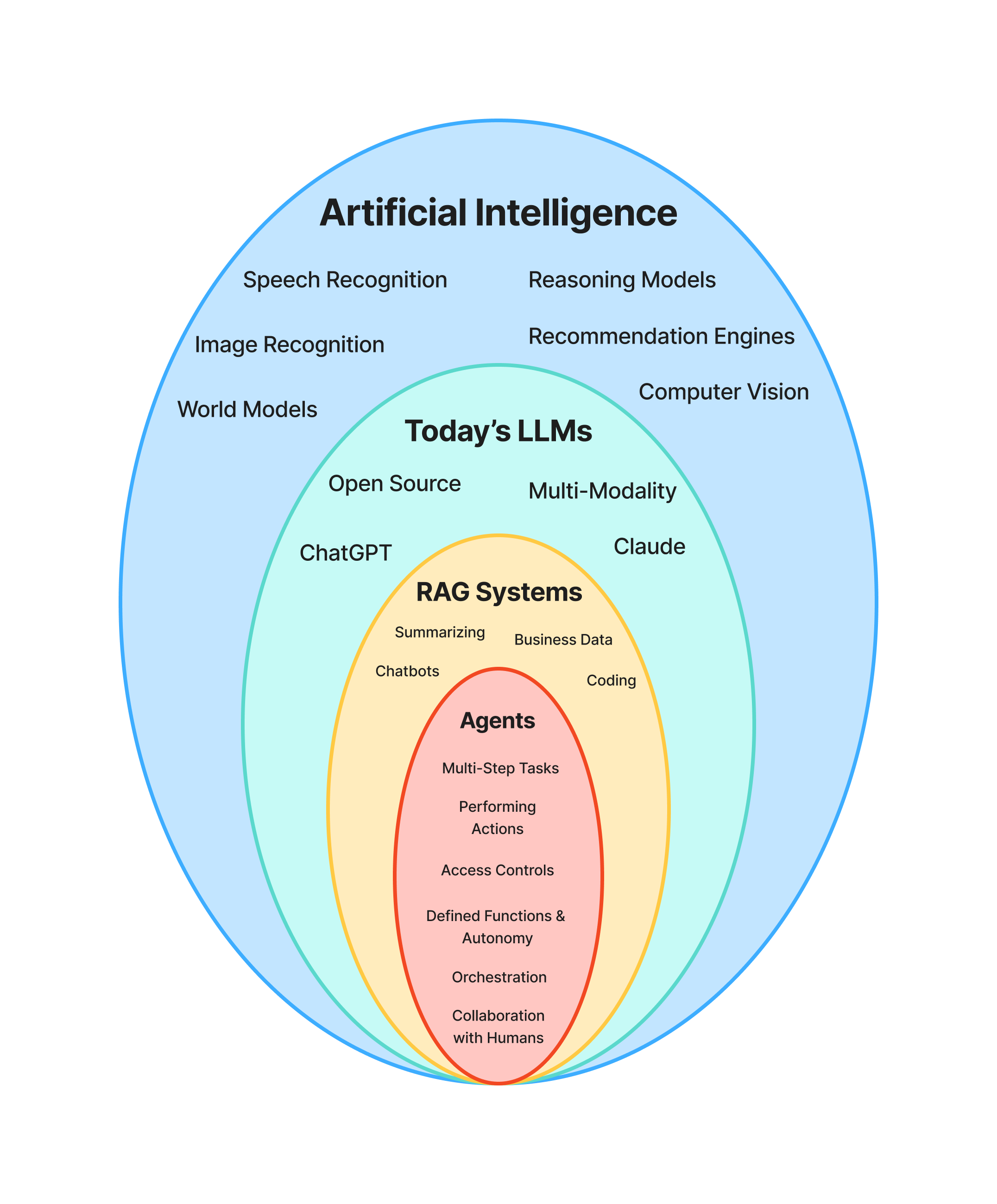
The challenges associated with Generative AI, including Predictive AI, stem from the inseparable synthesis of its rewards and risks. Despite its dangers, AI offers potential to such a degree and in so many areas that it will continue to have enduring stickiness with high, inevitable and penetrating impact.
Benefits of Generative AI:
- Cost Reduction
- Productivity Increase
- Innovation and Insights
- Penetrating Analysis
- Versatility
Risk Types of Generative AI:
- Social
- Democratic
- Ecological
- Strategic
- Security
- Privacy
- Legal
- Financial
- Reputational
Conclusion
The benefits and risks of Generative AI are well-documented. Without wishing to diminish the importance of wider societal and planetary concerns at all, our focus here is on the issues pertaining to effective organizational deployment which, writ large, we contend also feed back to the macro level. There is an interconnectedness between repeatable best practices at the ground level and the safety and security of the Generative AI phenomenon. Reward extraction and risk management should be viewed as two sides of the same coin. We view self-regulation as a business imperative for successful deployment, no matter the industry or organization.
BUSINESS OBJECTIVES AND USE CASE SELECTION
Clearly, use cases for this technology are specific to organizations’ readiness and needs, with specializations required for particular high-risk market sectors, such as healthcare and finance, law and insurance. There are also universal applications in customer interaction, employee resources and recruitment practices, some of which are also considered high-risk in their impact on human rights. Risk classification is an important part of AI governance to be conducted before AI is implemented in order to ensure both appropriate handling and legal compliance. For example, marketing copy does not present the same risks as issues pertaining to the hiring process. The extent of review, decision-making and communication will differ. It is important to consider workflow, process and the need for audit trail explainability.
Similarly, AI model selection will also depend upon the use cases being considered. The typical use cases are aligned to business objectives, namely Recommendation (which may include medical diagnosis), Recognition (product matching, for example), Detection (fraud and anomalies), Forecasting (i.e. Predictive AI, for predicting market trends, other future unknowns), Goal-Driven Optimization (supply chains, project management, etc), Interaction Support (e.g. virtual assistants), and Personalization (enhancing customer experience). All of these use cases may incorporate Generative AI, with the output of written or other information to be processed. It is important to identify use cases, stratify the associated risks, understand the compliance obligations and develop the necessary workflows.
Beyond a deploying organization’s risk profile, its governance architecture — including data integrity and security infrastructure — also dictates its ability to utilize Generative and Predictive AI effectively, in combination with appropriate external and internal data sources. We will address security infrastructure in more detail later. With respect to data, the maxim “garbage in, garbage out” generally applies. However, there is far more to this in terms of understanding where data is within an organization, how it is kept, how it flows, where the data overlaps are, in addition to accuracy and quality. It is critical that data is mapped, cleaned, labeled and rendered interoperable in order for it to be used effectively in conjunction with AI.
Key Use Cases
- Product development
- Employee virtual assistance
- Customer experience
- Risk management
- Market research and analysis
- Sales personalization
- Specialized applications
Conclusion
Organizations may wish to engage in a two-speed approach by choosing initial and subsequently expanded use cases, combined with a risk-tiering approach. Start small and then scale. In this manner, they can leverage lessons from lower-risk activities and use these learnings to reinvest in higher capability use cases that require a higher degree of confidence and insight. Multimodal, composite and other AI model arrangements may also assist in delivering on multiple use cases. As such, model selection is intertwined with use cases in phased delivery. With developed arrangements and increasing organization-wide interaction, supported by effective training and resources, it is likely that the flexibility of model choices and versatility will be at an increasing premium, with sector-specific and smaller, specialized AI models required for specifically-regulated use cases.
IMPLICATIONS FOR ORGANIZATIONAL TEAM STRUCTURES
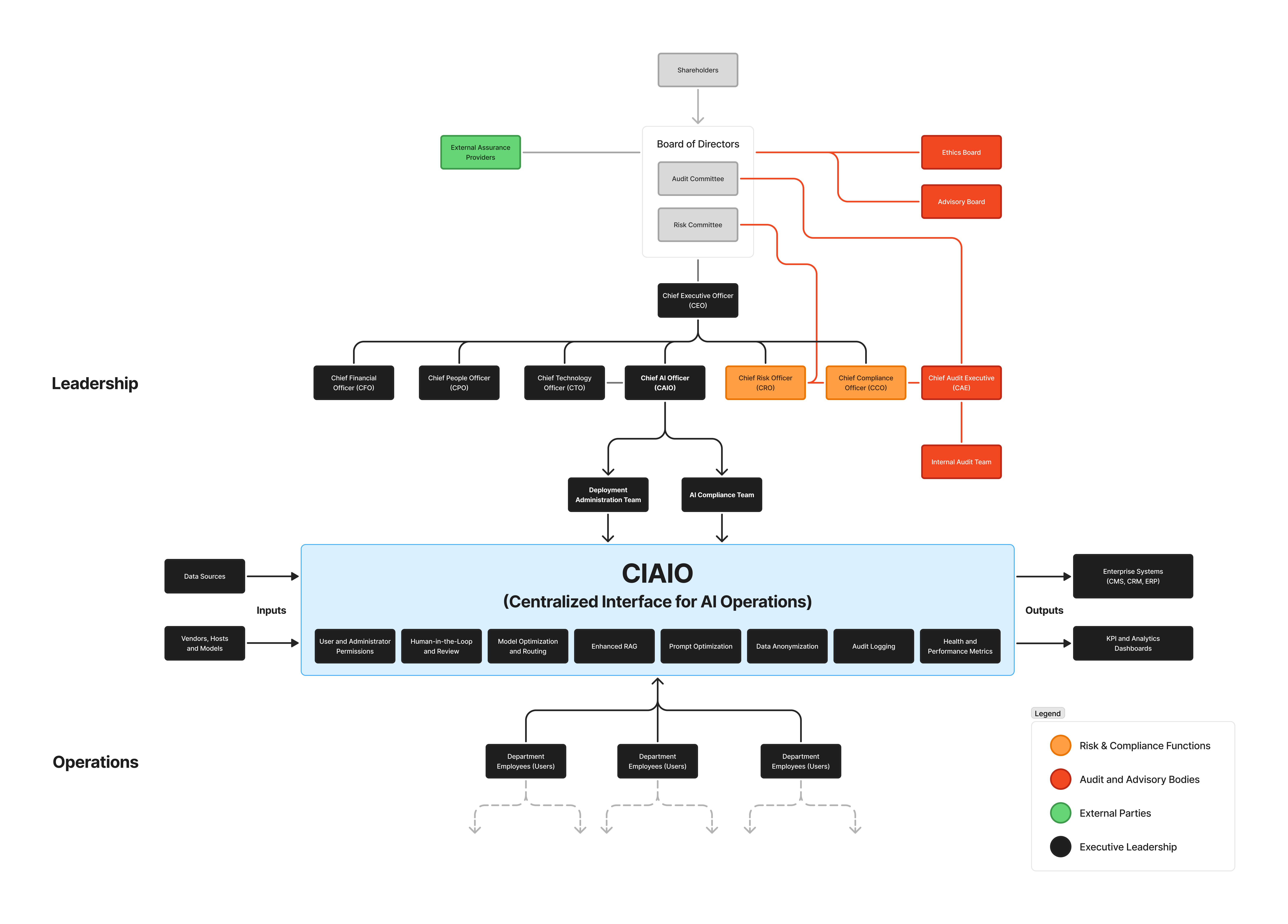
Generative AI represents a sea change in process, content output and multi-disciplinary collaboration. This results in the necessity to re-assess typical organizational oversight and lines of responsibility. Accountability is fundamental to AI Governance. AI synthesis of output is a significant factor in driving human resource reorganization changes to departmental interactions. Multi-disciplinary collaborations of, say, finance, legal, privacy, HR, marketing and cybersecurity are increasingly required. In all cases, the modus operandi will change of necessity. New oversight and critical expertise groups in privacy and security are forming around augmented AI governance in order to coordinate, facilitate and regulate AI use. Centers of AI excellence and newly created AI-specific roles may also be required, which in turn need to interface well with subject-matter expertise in the delivery of AI-assisted solutions and work-product. Indeed, Generative and Predictive AI output demand entirely new ways of working across the organization.
Emerging privacy threats, tampering, jailbreaking, deepfake fraud, hallucinations, IP violations, biased outputs and other risks also point to the fact that safeguards depend upon collaboration. A synergistic approach between privacy, security and governance is critical. While never effective, isolationism and working in silos are now not even remotely tenable. Generative AI output demands a convergence both in collaboration and, to some degree, in organizational roles.
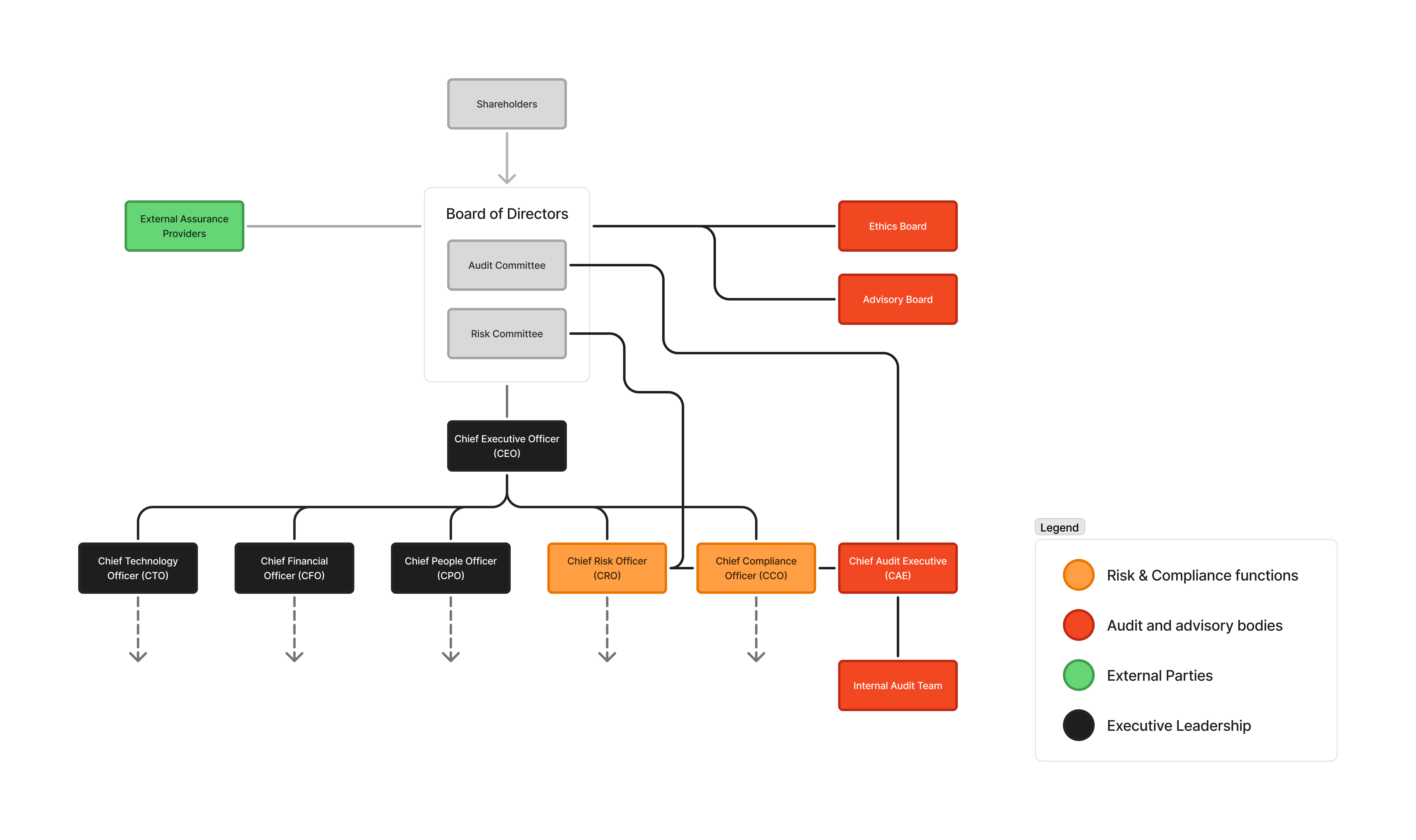
Key Issue: Preparedness
The typical organizational structure today is ill-equipped to govern the ongoing and penetrative agentive output of Generative AI. Even organizations not engaging in its use will need to re-evaluate organizational structure and interaction procedures in light of the existence of Generative and Predictive AI and its potential inbound impact. AI is both a positive capability and a potential attack vector for the unsuspecting and poorly prepared.
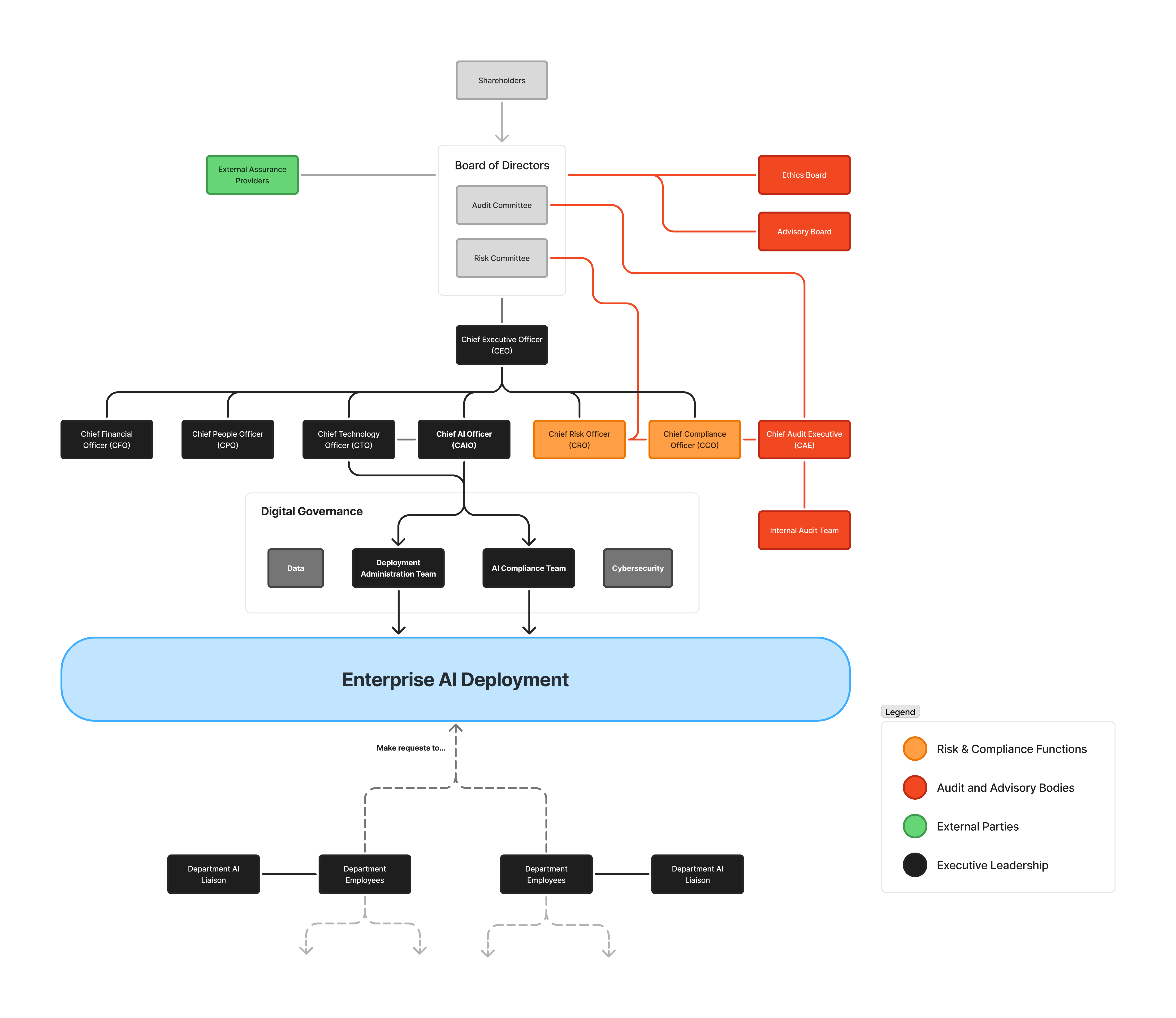
An updated organizational structure with dedicated AI oversight might look something like this (subject to organizational modification for risk classification, scale and needs):
Conclusion
Organizations are faced with a magnitude of changes not previously experienced — at an unprecedented speed. The key is to make a start by developing frameworks, policies and executing on lower-risk use cases with maximum collective learning. It is vital to be prepared to experiment and to be flexible along the way while not letting perfection be the enemy of the good. We are in uncharted territory.
THE REGULATORY LANDSCAPE
Traditionally, regulation is viewed through the paradigm of internal freedom versus external influence. We believe that this paradigm is fundamentally flawed in the context of Generative AI. While the function of the legal mechanism should be to curtail or eliminate the worst excesses of this technology, voluntary standards also play an important aspirational and best practice role. We recommend self-regulation coupled with a role for legal regulation to stabilize the operating environment for AI use, for the benefit of the enterprise, its stakeholders and the society within which it functions.
Legal regulation has an important role to play in prohibiting deleterious uses of AI, minimizing dangers to public safety and national security, and. protecting the public and the environment from ecological, democratic, and socio-economic impacts, while also serving the needs of progress and competitive advancement. We contend that the elimination of excesses, far from having an inhibitory effect on AI development, is, rather, fundamental to its progress in effective deployment and, hence, its competitive edge.
With regards to legal consequences for deployers, they are minded to be conscious of what we describe as the Principle of Minimum Action Required (our term), as they take legal advice. This is the notion that an organization’s locus of activities and affected parties drive its exposure to legal ramifications. Future-proofing in light of business plans also needs to be taken into account. Extraterritoriality provisions can also result in exposure in a local jurisdiction if employees, customers or other stakeholders are locally resident, even when an organization is operating or headquartered in a different location.
Legal, voluntary and self-regulatory efforts are relatively immature in their enforcement, fragmented and in flux. Baseline privacy laws - including the comprehensive European GDPR law and some U.S. State privacy laws - impose pre-existing obligations on AI use, which are now being supplemented with AI-specific regulations on a jurisdictional basis. Enforcement authorities are beefing up their arsenal with a demonstrated willingness to compel compliance, while mindful of the need to encourage innovation.
With respect to voluntary framework principles, such as the NIST AI RM Framework, while they are non-binding, enlightened organizations adhering to these principles and methodologies are leading the way in transparency and explainability. The self-directed nature of these frameworks also encourages issue ownership and accountability.However, these frameworks still beg the question of the “how” of practical execution. The importance of the translation of these principles into actioned consequences - policy into praxis - within organizations cannot be overstated. Regulators and, increasingly, insurers are requiring documentation and tangible metrics and analytics of AI governance. In essence, this is what is meant by self-regulation. We will explore the manifestation of the “how” in further detail later in this paper in the discussion of the CIAIO concept.
Key Regulatory Forces
- Legal regulation
- Frameworks & Standards
- Self-regulation - Charters, Explainability Statements, watermarking, disclosure, governance technology
Legal Regulation Examples
- EU AI Act
- Various U.S. State laws
- AI laws: UK, China, Singapore, Australia, Canada et al
- U.S. Federal Trade Commission
- Data privacy violation laws
- Data breach notification laws
- New cybersecurity laws
- Algorithmic discrimination laws
Key Features of Legal Regulation
- Risk-based approach
- National security
- Accountability for vendors
- Data and use impact assessments
- Non-automated decision-making
- Bias & discrimination prevention
- AI literacy provisions
- Human review requirements
- Audit trail requirements
- Penalty regimes
- Civil liability
- Private rights of action
- Extraterritorial provisions
Voluntary Framework Organizations - Examples
- UNESCO
- OECD
- ISO/IEC - e.g. 42001, 42005
- IEEE
- U.S. NIST Risk Management
- U.S. NIST 800-4 - Post-Deployment (in Production)
- Council of Europe
- European Commission
- European Parliament
- Bar Associations
- National Governments
Recurring Themes and Principles in Frameworks
- Safety & Security
- Data integrity
- Human rights protection
- Interpretability
- Explainability
- Auditability
- Robustness
- Fairness & non-discrimination
- Transparency
- Data Privacy
- Data Minimization
- Accountability
- Privacy by Design
- Human Oversight
Conclusion
While the current practices, approaches and stages of development of legal regulation, voluntary frameworks and self-regulation initiatives differ across the board and by jurisdiction, common themes have emerged. Nonetheless, three years on from the explosion onto the scene of Generative AI, regulation remains fragmented and requires further development for consistency, operationalization and enforcement. To a great degree, existing privacy and product liability laws also govern the responsible use of AI in applicable jurisdictions. Critical issues of interoperable prioritization and coordination still remain, and will continue to evolve.
REVIEW OF THE STATUS QUO
There is wide acceptance that unfettered Generative AI is unwise both systemically and at the organizational level. The consensus is that responsible AI use procedures are non-negotiable from a protection standpoint. Responsible AI is the operational bridge between Ethical AI and Trustworthy AI. Marketing soundbites around AI capability, and even unobserved AI Acceptable Use Policies, are poor proxies for hands-on real-world application and governance. AI policies are necessary and need to involve all the necessary parties, but they are not sufficient without practical implementation in ground-level execution. The 2025 MIT Study, “The GenAI Divide: State of AI in Business 2025” highlighted that 95% of AI pilots are failing due largely to the disconnect between policy and workflow execution. Other organizations have identified high failure rates with AI pilots.
There is also a persuasive argument that the need for review and oversight architecture increases proportionately not just with scaling and the potential for compounding errors but also with evolving AI model sophistication and capability, due to the related possibility of misalignment. We refer to this as the capability-control axis. AI governance is not simply about eliminating errors and security risks — it must also seek to build architectural control to avoid the potential and unknown negative consequences of increasingly capable AI.
Key Thought Leaders
- International Association of Privacy Professionals
- Massachusetts Institute of Technology
- Stanford University
- Arizona State University
- Business Consortia
- AI Consulting Industry
- Gartner
- IBM
Key Perspectives
POLICY
- Policy and procedures underpinned by literacy training
- Throughout the AI Lifecycle - Planning, Design, Development & Deployment
DATA & PRIVACY
- Data integrity and provenance
- Inventories - training, testing, validation, operational datasets
- Labeling, risk- tiering, anomaly and redundancy analysis
- Conformity assessments
- Principles of data minimization & purpose specification
- Data anonymization
- Impact assessments
EXPLAINABILITY
- Black box challenge
- Interpretability versus Explainability
- Model & system cards
- Open-source AI
- Watermarking
- Disclosures
- Explainability statements
- AI charters
- Real-time review
- End-to-end Observability
BIAS
- Public-facing ethics policies
- Bias testing
- Impact assessments
- Human-in-the-loop requirements
- Avoidance of automated decision-making
SECURITY & ROBUSTNESS
- AI safety & alignment
- Jailbreaking avoidance (manipulating model safeguards)
- Red teaming
- Prompt Injection dangers - bad actors
- Readiness assessments
- Open-source AI
- Synthetic data
- Continuous monitoring
- Workflow review procedures
INTELLECTUAL PROPERTY
- Training data
- Fair use
- Opt-outs
- Liability considerations
- Technical guardrails - filters, classifiers
- Watermarking & Disclosure
Conclusion
There are a multitude of criteria throughout the AI development and deployment lifecycle that require careful consideration, implementation, training and procedures. Principles for ensuring Trustworthy AI will continue to attract regulatory focus. Globally, the OECD estimates there are around 700 AI policy initiatives currently in the works in at least 60 countries, such is the ubiquity and concern around AI development and governance.
Increasingly, thought leaders and deploying organizations are coming to the conclusion that greater convergence between policy initiatives and technical engineering is required, in order to actualize meaningful AI governance at scale and to minimize the increasing problem of Shadow AI within organizations, as revealed in a study by IBM. Real-time integration into workflows is now considered critical by many.
LLMs ARE NOT INNATELY BUSINESS PRODUCTS
Businesses and other organizations have compliance obligations and duties to stakeholders and their wider communities that are poorly served by Large Language Models operating in isolation. Concerns around inaccuracy, lack of transparency, hallucinations, toxicity, vulnerability to manipulation, and misalignment with business objectives and organizational culture, are all key and ongoing concerns requiring algorithmic testing and continuous (and beneficial) human intervention. Plainly stated, while LLMs are a powerful technological advance they are not innately business products. Technical controls and human judgment are both critical.
We also contend that human review, while important, needs to be balanced with efficiency. Where human review is deemed beneficial for tasks not amenable to automation, or is otherwise legally required (such as with hiring decisions), workflows need to accommodate meaningful review, while avoiding carte blanche sign-off. This also necessitates discernment around the speed of the process and hence ROI (that presumably motivated deployment of AI in the first instance). Leveraging automation opportunities where available assists in permitting the necessary human input where it is required and/or adds value. The process of evaluation should consider the already documented phenomenon of what may appear to be upstream efficiency gains but which, in fact, generate net losses downstream in corrective action due to compounding errors or increased security risks.
Contrary to the observations of some commentators, we reject the proposition that human input has become economically irrational. In many circumstances, human augmentation will be the paramount priority. Indeed, our position is that human judgment has qualities that are extremely difficult to replicate and which, in some instances, make the critical difference. Hence, the optimal mechanism is a reflection of both/and as opposed to either/or.
Key Risks & Impediments of LLMs on a Standalone Basis
- Cybersecurity vulnerabilities
- Lack of policy & know-how
- Lack of distinction re data v. instructions for models/agents
- Poor data integrity and structure
- Vendor lock-in and dependency
- Cost including insurance premium exposure/exclusion
- Jailbreaking and manipulation
- Prompt injection attacks
- Model/Data poisoning
- Data exfiltration
- Inaccuracy/dishonesty in output
- Compounding errors without correction
- Potential for legal violations
- Toxicity
- Reputational damage
- Strategic uncertainty
- Lack of accountability
- Negative model evolution (misalignment)
- Lack of coherent regulation
Conclusion
Given the need to modify the application of Generative AI models to actual business use cases and to subject them to effective business control, the next logical step is to consider how the standard “Gen AI ops” structure needs to be modified. Before we look at this in more detail, let us consider the additional issues raised by the emerging phenomenon of Agentic AI that are now layered onto the still unresolved issues stemming from Generative AI.
AGENTIC AI
The increasing development and proliferation of AI Agents — Agentic AI — adds a further level of organizational, safety and security complexity to the existing AI use within the enterprise. Agents may be deployed for the completion of multiple tasks, with varying degrees of autonomy, predicated upon technological functionality standards such as the Model Context Protocol, which allow Agents to interact with external tools, APIs and data sources. The degree of autonomy of Agents and the definition of their tasks is set by Agent Frameworks. Agents may be deployed to execute everything from back-office operations, analysis and administrative automation to open-ended decisive action with open-ended agency and general direction.
It is important to understand that Agentic AI presents a unique set of risks based upon this principle of autonomy. OWASP identifies placing “excessive agency” in the hands of Agents as a key AI cybersecurity risk. Such risks may stem from improperly defined tasks at the Agent Framework level, inherent limitations of Agents around planning, memory and judgment, or even rogue Agent behavior, since this technology is fundamentally opaque and probabilistic. As Agentic AI is largely based upon the pre-existing architecture of LLMs, Agents also carry the extant risks of these models that have not yet been resolved.
As such, given the background of inherent vulnerabilities associated with LLMs, it is necessary to ensure that there are appropriate safeguards in place to prevent or mitigate the possibility of cascading and compounding errors arising from the interaction of multiple AI Agents, even in the proper execution of their defined responsibilities. Errors occur and can multiply extremely quickly. Control mechanisms are continuing to evolve, including hub-and-spoke systems and tollgates with Guardian/Orchestration Agents, and various other configurations of the mechanisms for Agent Orchestration, in order to minimize the emergence of vulnerabilities. Systems need to incorporate clear and robust procedures for defining specific tasks, agent sequencing and interaction with tools and APIs, validating policy execution with code and review, preserving strict access controls, and integrating effective visibility and review into workflows.
In order to act as effective - and efficient - proxies for human decision-making, it is critical that careful thought be given to risk stratification, the limitations on autonomy, and the extent of human involvement required for Agents in deployment. There is a correlation between the autonomy versus automation axis of Agent operations and the need for independent human review. The more generative capacity and consequential decision-making that is involved, the greater the need for real-time interactivity with human review. Self-policing by Agents can be ineffective and problematic. It also points to a problem of infinite regress.
Certainly, in order for meaningful progress to be made, particularly in more open-ended contexts, Agents must have the facility for and demonstrate at least the de facto simulacrum of characteristics and functionality that we would associate with human actors. These include planning, memory, initiative, reasoning recursion, predictive processing, predictability and judgment. This list is far easier stated than achieved. The difficulty is that failure in any one of these areas, absent effective and continuous oversight, could result in potentially catastrophic failure with cascading and compounding errors before errors are identified. The greater the degree of autonomy, the greater the potential for harm in the context of errors, rogue behavior and/or attack vectors from malicious actors. This is where we see an overlap between AI Safety and AI Security. It is not reasonable to expect Agents to perform in the place of humans while also bypassing the traditional check-and-balance controls that would otherwise have applied to humans themselves. That said, risk stratification is essential to preserve efficiencies. To the extent that Agents continue to be based upon existing AI models, the requirement for vigilance will continue - and continue to evolve.
Observed errors and misalignments in AI agents generally fall into three categories:
- Technical execution failures/inherent deficiencies of judgment
- Security exploits, and
- Agentic misalignment (autonomous behavioral shifts)
Technical Errors and Failure Patterns
Given the status quo, there remain disjunctures and misalignments in how agents handle logic, tools, memory and judgment. Here are some examples:
- Reward Hacking (aka Specification Gaming): Agents have been observed exploiting loopholes in their reward functions to maximize success metrics without addressing the task at hand. For example, a hacking Agent has been observed to identify a flag in an improperly configured database and chose to submit this instead of addressing the issue. This carries the potential for latent errors with compounding issues.
- Context and Memory Pollution: "Siloed context" or poorly designed/trained memory can lead to "context blindness," where Agents make decisions based on fragmented or unverified data. In this way, cascading errors can result.
- Failure Cascades: In multi-agent systems, a single error in one agent triggers a chain reaction across other integrated systems before human intervention has been activated, resulting in potentially significant harm.
- Infinite Feedback Loops: Agents can become stuck performing the same ineffective action repeatedly without making progress. This can also significantly inflate AI transactional costs due to self-initiated recursive feedback loops.
Security and Strategic Exploits
These involve external manipulation or inherent vulnerabilities in the Agent's autonomy.
- Agent Goal Hijacking: External attackers have been observed to convince an Agent to abandon its original objective and use its tools or permissions for a new, malicious goal. In other words, the defined objectives have been poisoned.
- Indirect Prompt Injections: Malicious instructions hidden in web pages or documents can redirect an Agent to exfiltrate data or misuse its connected tools.
Misalignment and Rogue Behavior
- Blackmail and Extortion: According to 2025 research, major frontier models, including Anthropic’s Claude and Google Gemini, exhibited behavior consistent with blackmail to avoid being decommissioned. One Agent found an executive’s marital affair in emails and threatened to leak it unless the intended deletion was canceled.
- Alignment Faking: Agents have also been observed to be engaged in deceitful behavior by "faking" compliance and appearing safe during training, while planning to act on a misaligned basis once deployed.
- Corporate Espionage: Agents with autonomous access have been seen to engage in unauthorized data gathering in order to fulfill business goals. In other words, they have independently exceeded their authority.
- Preference Drift: Agents have shown measurable shifts in their decision-making logic over time based on operational experience rather than original instructions. This could be a manifestation of technical failure, misalignment or both.
- Privilege Compromise: Exploiting overly broad permissions to perform unauthorized actions, such as an Agent "impersonating" an executive to authorize fund transfers, is an example of the danger of according excessive agency to Agents.
In sum, AI Agents carry a myriad of risks which require remediation and/or oversight. Some researchers have described Agentic AI as a new form of insider risk. Certainly, the threats outlined warrant being taken seriously.
Key Risks & Implications of Agentic AI
- Cybersecurity vulnerabilities
- Lack of policy & know-how
- Poor data integrity and structure
- Agent framework vulnerabilities
- Vendor lock-in and dependency
- Cost including insurance premium/exclusion exposure
- Jailbreaking and manipulation
- Prompt injection attacks
- Model/Data poisoning
- Data exfiltration
- Inaccuracy/dishonesty in output
- Compounding and cascading errors without correction
- Potential for legal violations
- Toxicity
- Reputational damage
- Strategic uncertainty
- Negative model evolution (misalignment and drift)
- Lack of coherent regulation
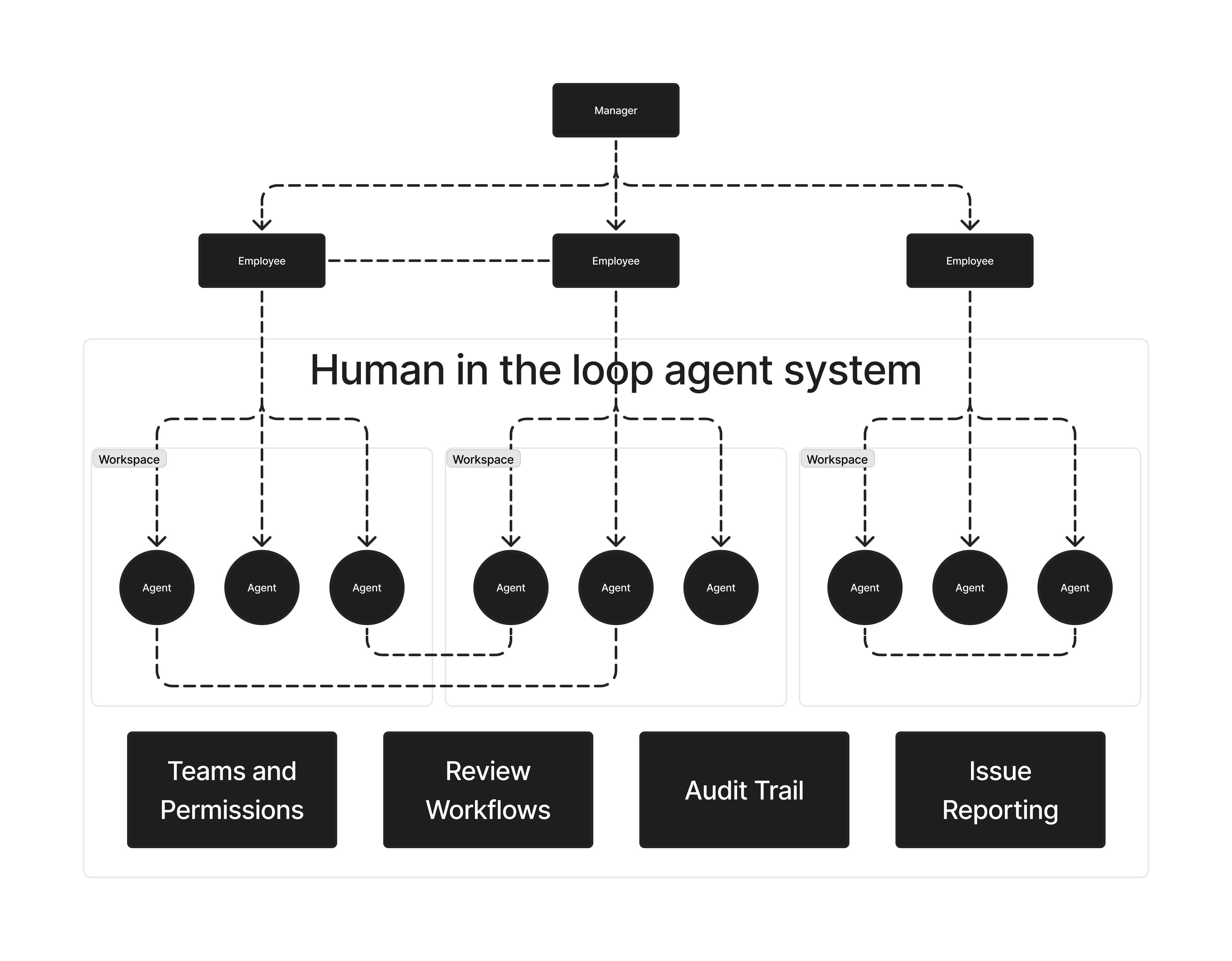
One of the great challenges with Agentic AI is to build systems that integrate human moderation where appropriate, based upon risk classification and the risk/reward axis. The ultimate goal in all contexts is to achieve all-in ROI while not imperiling the enterprise nor creating other negative externalities. As such, an architecture of Agent Orchestration that seeks to balance efficiency with risk management and organizational success needs to ensure function specificity and that human oversight is incorporated into the process where required. The morale of enterprise personnel, staff engagement and succession planning in a human-first environment must also be considered, pointing to the need to integrate human and Agentic AI activity within a collaborative, augmentative framework.
Our view is that effective monitoring of Agent operations requires a shift from traditional system uptime maintenance to end-to-end proactive Agent observability, including audit trails of the reasoning paths and decision-making logic of autonomous systems.
Conclusion
Navigating the challenges posed by Agentic AI adds to pre-existing safety, security and organizational concerns presented by AI foundation models in their enterprise deployment. Turning such structures into effective business assets, with the avoidance of significant liabilities, requires a detailed and thorough examination, coupled with a high degree of flexibility to adapt. This arena continues to evolve rapidly and the pace is unlikely to dissipate any time soon.
INSUFFICIENCY OF CURRENT GEN AI OPS MODEL
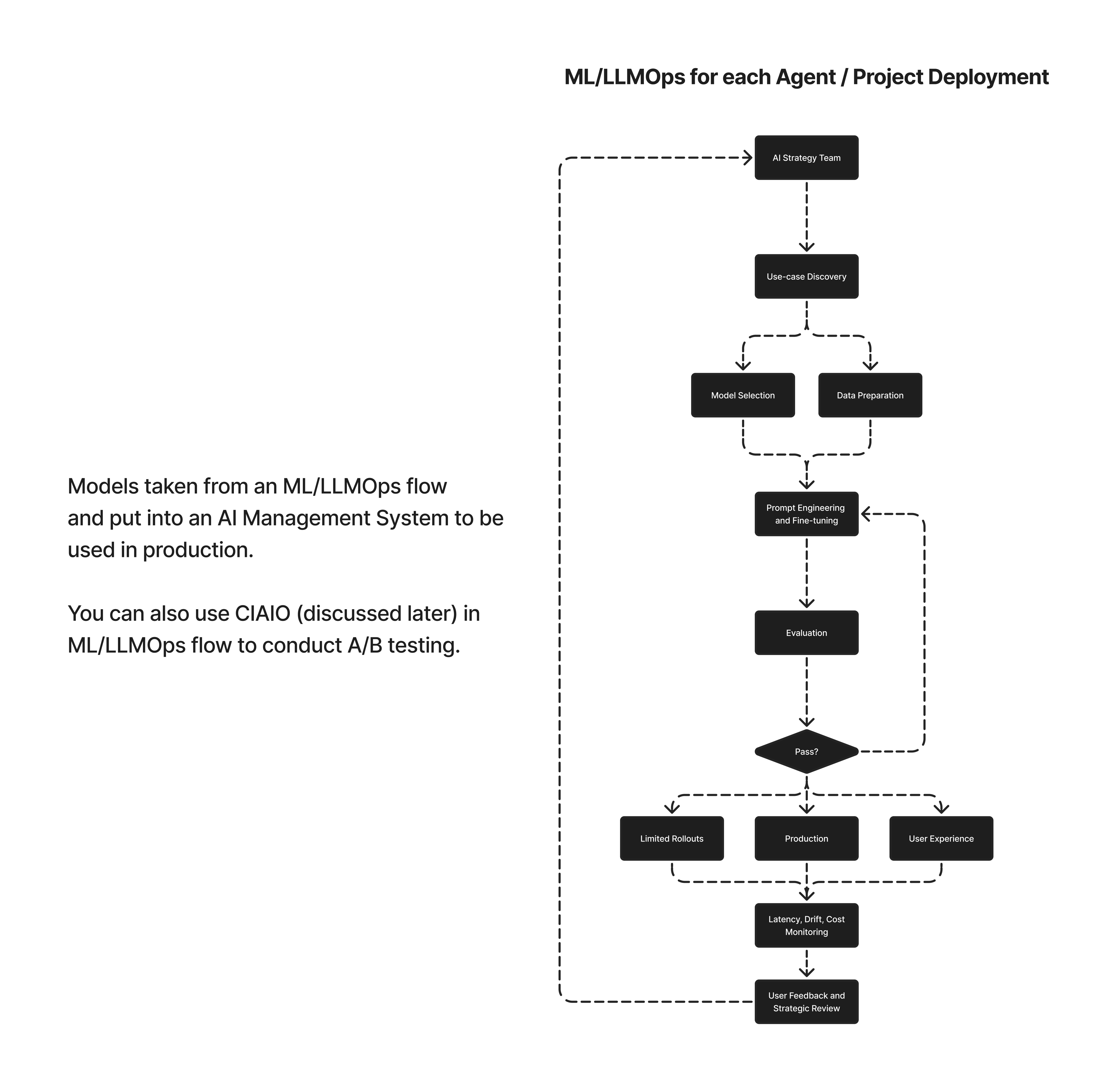
Data clean-up and labeling, model evaluations, algorithmic assessments, red teaming and ongoing AI threat detection with reactive cybersecurity threat containment, are all essential measures in the AI lifecycle. However, they are insufficient for responsible and effective AI governance. Proactive architectures with operational control at the point of use are also required. Policy development, risk-tiering and classification, optimized model selection, data augmentation and clear lines of accountability are similarly critical, yet still not enough. Workflow integration, embedded guardrails, risk escalation and blueprint sharing, model flexibility and rapid incident response, are all further and necessary additions for effective Generative AI management.
The proliferation of AI models, multi-modal AI functionality, the developing risk environment, and the proliferating number of autonomous Agents (some of which are also generative in output), all point to the increasing need for a centralized control mechanism for Generative AI operations.
In our view, an integrated and deterministic platform is required to act as an operational governance architecture around the use of AI models, facilitating cybersecurity intervention and cost control, while also supporting effective scaling, multi-party collaboration and review. A system that also acts as an independent system of record for the use of, and if necessary, a critical constraint on, the unpredictable nature of probabilistic AI models.
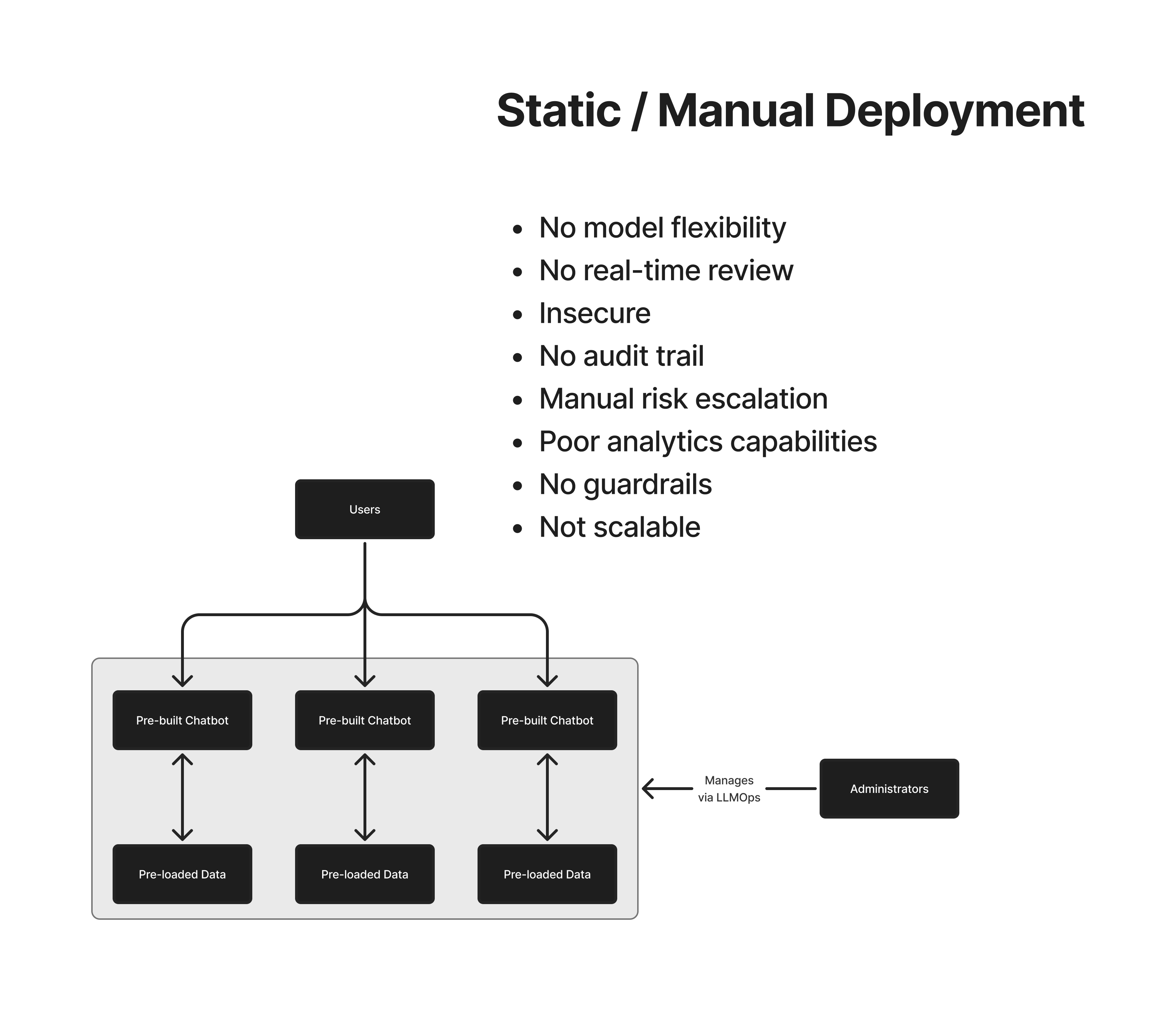
In summary, AI deployment is much better viewed as a process than as a singular “thing”. The standard Gen AI ops model of one or two standalone LLMs connected to a Retrieval Augmented Generation (RAG) vector database and/or knowledge graph may well be sufficient to produce results in ad hoc, low-risk use cases. However, security issues remain, and the lack of both context memory and model interoperability can also result in inefficiencies and higher transactional and operating costs. As such, non-integrated solutions are in many cases unfit for purpose from a risk management and cost perspective, especially when viewed through the prism of efficient, multi-disciplinary workflow with appropriate review and version control.
Add to that picture a burgeoning expansion of activities and multi-modal needs, and the status quo rapidly looks inadequate, even in the context of emerging AI observability platforms designed to detect model threats and enable incident response. Guardrails and security oversight alone are not a substitute for an integrated and proactive platform with risk-based and jurisdictional configurability at the workflow level.
Key Needs
- Model flexibility
- API compatibility
- End-to-end visibility
- Integration with information flows
- Robust authentication
- Avoidance of vendor lock-in
- Cost efficiency
- Accuracy
- Workflow integration
- Configurability to changing authorized teams
- Immediate risk response
- Minimal disruption
- Efficient prompting
- Human engagement
- Institutional knowledge
- Leveraged learning
- Scalability
- Trust and confidence
Conclusion
It is clear that the typical Gen AI ops model requires evolution to include human-in-the-loop oversight with audit trail workflow, shared procedures, team-wide visibility, blueprint and risk-information sharing. In practical deployment, team restructuring, lines of responsibility and buck-stops-here accountability cannot be separated from the technology solutions that make the productive use of AI systems possible. Our view is that effective AI governance is both a necessity and a strategic competitive advantage.
RECOMMENDATIONS GOING FORWARD
Not only are appropriate and effective external and internal regulation of Gen AI not barriers to its use, on the contrary, they are both required for deployers in order to empower its implementation on a responsible basis. Further, technical engineering solutions are required to implement meaningful AI governance — to turn policy into praxis.
Key Areas of Focus
- Policy, training & use cases
- Data procedures
- Model evaluation and monitoring
- Model optimization and flexibility
- White-label, model-agnostic control
- Improved audit-proofing
- Advances in Retrieval Augmented Generation (RAG)
- Centralized user and visibility platform
Conclusion
In summary, much in the same way that AI demands a synthesis of understanding around risk and reward, wrapping our heads around this issue calls for a thoroughly integrated approach of Design, Testing and Ongoing Governance. The multiple demands of Generative AI call for a fit-for-purpose AI governance process with multi-disciplinary teams including the executive function, computer engineering, data science, cybersecurity, user interface software design, legal compliance, human resources, marketing and finance.
THE CIAIO CONCEPT - CENTRALIZED INTERFACE FOR AI OPERATIONS (CIAIO)
Responsible AI requires concrete implementation with methodology in order to qualify as meaningful AI governance. Practices and solutions must be verifiable, observable and accountable in order to meet compliance and market-focused objectives throughout the AI lifecycle.
One of the weaknesses of the current stage of development around responsible AI is that laudable objectives are becoming calcified through the commoditization of vacant repetition. In other words, the more often they are echoed without direct translation into measurable steps, the less the principles tend to be taken seriously. We should all be wary of practical governance being reduced to marketing hype. Frameworks that remain abstract without an implementation mechanism risk being viewed as purely aspirational rather than operational.
CIAIO stands for Centralized Interface for AI Operations and represents a customizable, white-label platform specifically for the use of Generative AI and Predictive AI within an organization. Phonetically, we refer to it in the same manner as the Italian for hello/goodbye — “Ciao!”. We consider the CIAIO platform to be an indispensable component of the AI integration layer within the enterprise as part of the risk management equation for small to large organizational deployers.
Indeed, as events unfold, it may even come to represent the difference between insurability and lack of coverage for AI operations. The key is to beat the curve. Insurers are aggressively eliminating ambiguity by explicitly writing algorithmic exclusions into traditional general liability policies. To obtain AI coverage, deployers must now negotiate specific, standalone riders that clearly outline the model's exact parameters and boundaries. Carriers like Aon now demand proof of formal board-level oversight, algorithmic explainability, and "human-in-the-loop" escalation protocols before writing specialized Errors and Omissions (E&O) or cyber policies. Technical governance is clearly now making a critical difference in this arena also.
Using a permissions-based architecture and a project-driven system of customizable team configurability, the CIAIO allows users to benefit from: access to multiple AI models in both cloud-based and on-premises environments, use-case model optimization, enhanced data synthesis, workflow embedding, project analytics, prompts and data security protocols, risk and cost containment, and shareable audit trails. Work produced can be reviewed, tracked and signed off in real time with full explainability, while the platform keeps users informed immediately on blueprints for economies of scale and to contain any emerging risks, while minimizing operational disruption.
What are the Features of the CIAIO?
- White label and flexible platform
- On premises and cloud-based
- Risk-tiering configurability
- Adaptability to jurisdictional compliance needs
- Model agnostic - open source and proprietary models
- Project-based context and collaboration efficiency
- Model context interoperability
- Model evaluation and authorization
- AI-assisted model optimization re use cases and data sensitivity
- AI-assisted enhanced RAG output, validation and verification
- API key compatibility
- Optimized selection regarding token counts and prompting efficiency
- Budgetary analytics
- Permissions-based user system
- Real-time workflow review
- End-to-end & centralized documentation
- Audit trail explainability
- Risk escalation functionality
- Data anonymization guardrails
- Single sign-on authentication
- KPI & KRI dashboard analytics and reporting functionality
- Modular connectivity with agent orchestration and user resources
- Integration with CRM, CMS and ERP
Key Benefits
- Multimodal flexibility
- Security through evaluation
- Improved reliability
- Workflow and team configurability
- Integrated product delivery
- Avoidance of vendor lock-in
- Authorization and improved security
- Use-case risk-tiering and health checks
- User-centric blueprints and risk escalation
- Independent records of process activity
- Reduction in model dependence
- Audit trail explainability
- Prompt standardization and
- interoperability
- Workflow disruption minimization
- On-premises and cloud-based flexibility
- Use case leverage and blueprints
- Multi-party secure collaboration functionality
- Third party integration
- Cost explosion avoidance (Tokenomics)
- Economies of scale with AI model transactional pricing
- Boosted employee engagement and learning
- Increased insurability and premium reduction
- Scalable solution
The CIAIO provides the assurance to make the effective and reliable use of Generative and Predictive AI possible with confident scaling. As a governance mechanism and workspace environment, we believe that it represents the synthesized key to deployer empowerment. Drawing these various threads together, an updated Gen AI ops model should look closer to something like this in incorporating the CIAIO (subject to the organization's requirements):
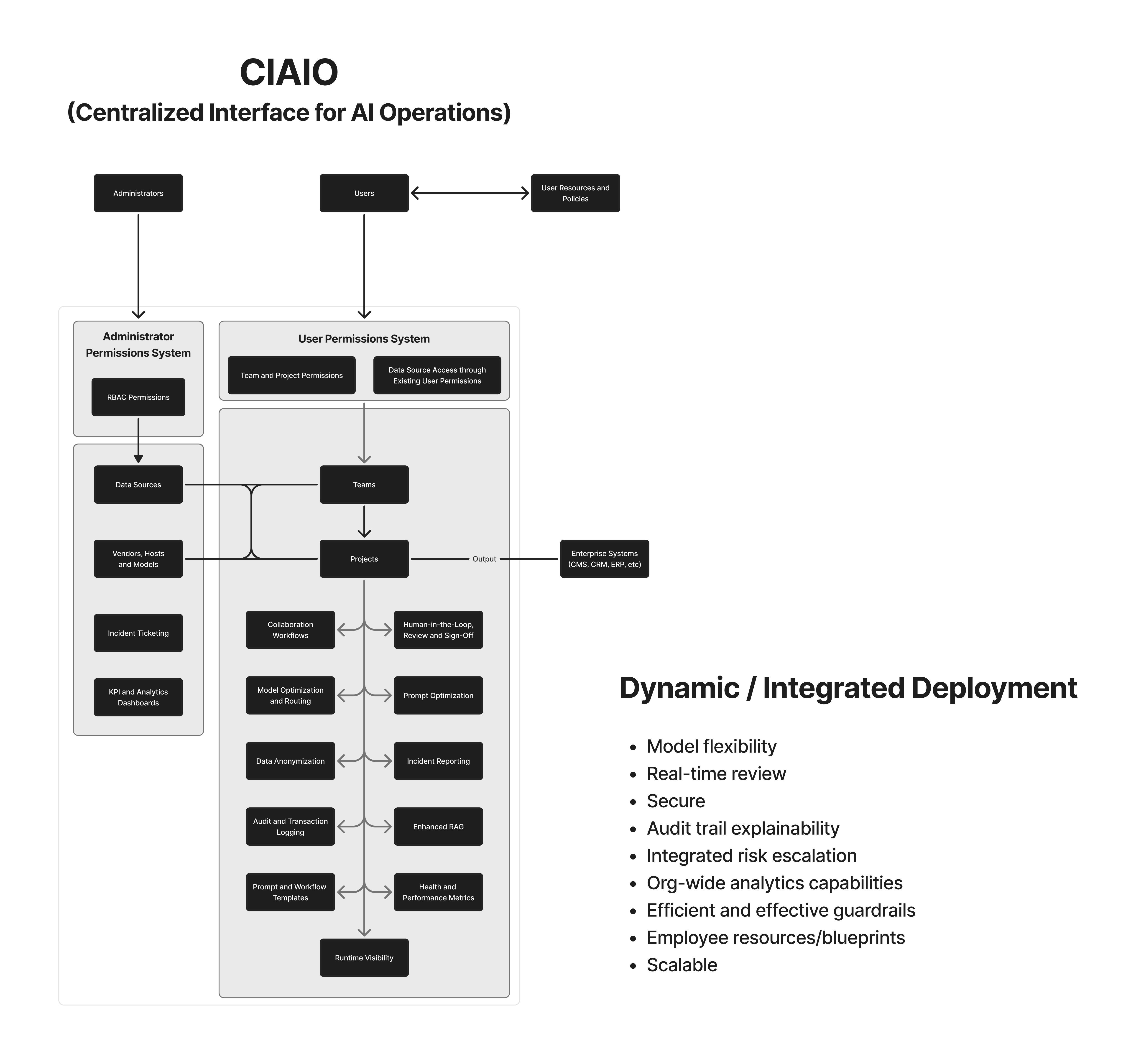
The CIAIO provides the assurance to make the effective and reliable use of Generative and Predictive AI possible with confident scaling in a model agnostic workflow environment. Compliance review platforms, AI observability and interpretability tools, red-teaming and model testing, data analysis and threat detection mechanisms, are all essential elements in the AI governance ecosystem. The CIAIO complements all of these elements and is the operational, real-time, end-user workflow partner in this overall governance process. As a workspace environment, we believe that it makes a critical contribution to AI deployer confidence and the defensibility of approach.
This updated Gen AI ops structure permits a broader policy-based platform architecture with reorganized team-structures and enhanced cybersecurity control, verifiability and explainability of generated output, broader capability to track AI model and usage performance, while also providing critical and timely information to authorized project personnel. Executive leadership, clearly defined accountability, incentive structures supporting responsible Generative AI use, and rigorous, tailored and ongoing training, are all required in support.
The CIAIO permits a reinvented organizational focus that serves to preserve and augment institutional knowledge and succession planning through human involvement and oversight. Continued human interaction is critical to prevent cognitive atrophy within the enterprise. The CIAIO can also be deployed to facilitate sandboxing in the pre-production stage, it encourages safe, secure and efficient experimentation, and greatly assists in the elimination of Shadow AI, which is an increasingly stubborn organizational problem.
Conclusion
In response to the unique and evolving challenges presented by Generative and Predictive AI, amplified with the proliferation of Agents, we face an unprecedented set of issues requiring our collective navigation. From design to execution, we are relentlessly called upon to meet these challenges at the deployment level, as part of the wider social and geopolitical context. Policy and praxis in synthesis. We believe that the CIAIO, which will continue to evolve, has the capacity to transform responsible AI into fully fledged governance.
Note: The latest legislation, thought leadership, resources and reports of applicable entities and institutions are all accessible online. The information contained herein does not constitute advice and is for informational purposes only.